in september


DSC_0329 (3)As surely as April brings thoughts of throwing open the windows to the warmer, fresh air, September starts me layering, feathering, and gathering. Yes, I’m sad to see summer go … but I’m determined to welcome fall and find a bit of time for some fun before the snow flies!

Although it’s not formally fall, it feels like it, and it’s starting to look like it too. Yellow and orange mums sit on the stoop where it seems only days ago were daisies. We kick acorns down the road when we go for a walk and hickory nuts too. We’re gathering the last of our luscious tomatoes and saying so long to our flowers.  I’m thinking less about burgers on the grill and more about soups in the crockpot. Suddenly, I’ve a hankering to bake bread!

Just now, apples simmer on the stove on their way to becoming apple sauce. It’s the season of cinnamon, cloves, and ginger. We’ve been to the orchard once already and will probably return today. Later, and by request, I’ll make the first pumpkin recipe of the season: pumpkin whoopie pies.  We’ve got neighbors to thank … and those pies are a whole heaping handful of fall gratitude.

Just as we did this summer, we’ll be living out a (fun-seeking) fall alphabet:

A- apple and peach picking (of course!) — B- bonfire in the fire pit out back — C- cider and crisps and cornstalks on the porch — D-  E- F- festivals and fairs and foliage — G- H- I- J- K- L- M- mums from the garden center N- O- P- pumpkins on the steps and in the oven! — Q- R- S- T- U- V- W- X- Y- Z-

We fill it in as we go along and somehow, the alphabet inspires us to keep looking for all the fun we know is out there … but we’re sometimes too busy or tired or overwhelmed to think about. It’s a fun kind of fill-in-the-blank we look forward to.

I can’t wait to leaf kick (L) and discover what face emerges on our Jack o’ Lantern (J). It’s time to pack up the beach towels, layer on the sweaters and boots, and feather the bed with our winter quilt (Q).

I’m hoping for a few more walks on the beach and a couple more tosses of the tennis ball, but mostly, I’m headed toward autumn – full steam ahead!

For those of you local … We’re planning for this Equinox Festival and hopefully headed to this fair for the first time.  This slow-cooker soup is on the menu this week.

And if you’re looking for an easy fall side or transitional topping for the last of summer’s ice cream, you’ll find my go-to applesauce recipe below:

APPLESAUCE

from my mother-in-law’s Betty Crocker cookbook
  • 4 medium cooking apples, each cut into fourths
  • 1/2 cup water
  • 1/2 cup packed brown sugar
  • 1/4 teaspoon ground cinnamon
  • 1/8 teaspoon ground nutmeg

Heat apples and water to boiling over medium heat; reduce heat. Simmer uncovered, stirring occasionally* to break up apples, until tender, 5 to 10 minutes. Stir in remaining ingredients. Heat to boiling; boil and sitr 1 minute. Makes about 4 cups.

*I used a potato masher!


humanity

DSC_0449 (2)

I’ve got a batch of granola in the oven. Tomorrow, when I return to school for my first teacher in-service day,  I’ll bring a glass jar full of it to my teaching partner. A little something from me to her.  A small sharing of something good.  The tiniest of reminders: we’re in this together.

And we are. All of us. Strangers and friends and colleagues alike. Men, women, children. Races and religions. Military and civilian. Haves and have nots. This community and the one across the border. I am human … and so are you. We are human and we’re all in this together.

Maybe it’s time to spread a little more of that humanity around. Probably it’s even past time. It’s never too late for a kindness, though, and now’s as good a time as any to bring such thoughts right smack to the forefront of my consciousness.

As the only humans living here, it’s our responsibility to make the world a better place. Each of us. Your world. My world. Our world. The world we all live in. The world we raise our children in.

The world I’m about to teach my students in.

What do I want those children to know about being human? How do I live humanity out in my own life? In what ways can I be more giving? Who needs my help?

And how?

It is human to help: There are as many ways to help as there are people who need help. Think about family, friends, neighbors. New moms and dads. The elderly. Is there a meal you could cook? Laundry to be washed? A resume you could write? A lawn to be mowed? Who could use a babysitter? A ride? A quick trip to the grocery store? A smile?

It is human to give: When I think about the most giving people I know, it’s easy to see what they all have in common. For starters, they’re good listeners.  They’re quick to recognize need when they see it, and they’re first in line to help. And there’s so much to give! As humans, we have so much to offer! Our time. Our respect. Our attention. Friendship. Love. Guidance. Gratitude.

Of course there are many more ways to be human.  I’ve written about the verbs of kindness before and reaching out in humanity is sort of similar – it’s just that humanity is also understanding the commonalities we share, the hand-to-hand-to-hand connections between us, and the knowledge that I see you and honor you … and I hope you see and honor me too.

So I’ll be looking around more consciously human than ever before.  I’ll be more consciously looking to see, honor, help, and give.

And maybe that’s what I want my students to know first: I see you and honor you.  I will help you. From one human to another … I will give you my best.

And we’re all in this together.


zucchini bread

DSC_0337 (4)Good news!

It’s harvest time in New England!

We’re just past picking green beans and starting to celebrate luscious tomatoes around here. We watch our pumpkins grow by the day, and I love to watch their shape emerge: tall and sophisticated … squat and rotund… and this year, a white pumpkin! Surprise!

Probably the most prolific vegetable in the New England garden is the zucchini – folks around here harvest so much of the stuff, they literally give it away. It’s not uncommon to see a pig-pile of zucchini for the taking on the staff room table at work or roadside with a hand-lettered invitation: FREE.

Zucchini is one of the most flexible, hardworking veggies around, and this time of year, it makes an appearance in so many of our meals. In our house, it’s a salad and stir-fry staple. It shows up on many a vegetable platter because it’s so chop-able, slice-able, and dip-able. Zuchinni roasts up nicely in a grilled veggie pouch or sautees well with it’s pal, summer squash, served with a dusting of freshly shredded parm.

And now – I’m baking with it too! Zucchini, you’re pretty much an all-around, all-star!

This recipe, from my newest and most favorite cookbook, the Vermont Farm Table Cookbook, makes two loaves of moist zuchinni bread – one to enjoy and another to share. We’ve enjoyed our bread for breakfast with coffee and for an afternoon snack with milk. The recipe calls for a cool serving – but we loved it warm, right from the oven.

Zucchini Bread 

from Two Black Sheep Farm in Hero, Vermont

  • 3 large eggs, lightly beaten
  • 1 cup canola or vegetable oil
  • 1 tablespoon vanilla extract
  • 3 cups all-purpose flour
  • 2 cups granulated sugar
  • 1 tablespoon ground cinnamon
  • 1 teaspoon grated nutmeg
  • 1 teaspoon sea salt
  • 1 teaspoon baking soda
  • 1/2 teaspoon baking powder
  • 2 cups pureed unpeeled zucchini
  • 1 cup raisins, chopped walnuts, or chocolate chips (optional)
  1. Preheat the oven to 350 degrees. Spray two 9×5-inch loaf pans with nonstick cooking spray and lightly dust with flour. Set aside.
  2. Whisk together the eggs, oils, and vanilla.
  3. Sift together the flour, sugar, cinnamon, nutmeg, sea salt, baking soda, and baking powder. Add the flour mixture to the we ingredients and stir until smooth. Stir in the zucchini and raisins, nuts, or chocolate chips, if using. Pour into the prepared loaf pans and bake until a toothpick inserted into the center of the bread comes out clean, about 1 hour.
  4. Let the bread cool in the pans for about 15 minutes, then turn the loaves out onto a cooling rack. Let cool completely before serving.


finding hope

DSC_0381 (1)

Right about now, it’s hard to find hope.

And it’s difficult to feel hopeful.

But there must be as many ways to find what’s lost as there are ways to lose something in the first place. So, now that hope feels a little lost, I’ve been searching.

I found a kind of hope I’ll call awe.

The awe of standing so small alongside the towering magnificence of a mountain fills my heart with hope and exhilarates my imagination.  I felt awe several times this summer and each time, I was interacting with a view, a place, a piece of the world so much bigger than I. The mountains. The ocean. A big and bustling city.

Maybe being filled with awe is like in kind to feeling centered and prayerful.

Maybe as I stood top-side on a boat scanning an ocean as far and wide as my eye could see, maybe I somehow felt like the only silent and still entity for miles around. Maybe surrounded by the vastness of all that water, I felt more like an anchor and less adrift and at the whim of the waves.

Maybe climbing a mountain to its peak is some sort of symbol of life’s hike to the heavens. And maybe up there in all that open air of the summit, it’s easier to breathe. Easier to believe. Easier to understand I am but one person in a very big, very confusing world. Maybe it takes some of the pressure off.

I found a kind of hope I’ll call beauty.

I keep looking for the beauty all around me and find it with a bit of conscious effort. A few internal reminders help me understand the fact that the world’s ugliness must in some way, however large or small, be counteracted by its beauty. Its complexity opposed by its simplicity. Its violence, contrasted by moments – however brief – of peace.

Many times it’s nature offering up all that counterintelligence – the perfect, pink curl of a zinnia petal. The softest summer light at sunset on the river. The quiet call of a barred owl after midnight.

There’s beauty too in the smile of a friend, or my son, or the stranger behind me in line at the grocery store. There’s a simple kind of knowing we trade in a smile. There’s a peaceful ease and delight to be had in the sharing of music, a meal, or a book I think you simply must read. There’s happiness to be found in the hugs we exchange, the return of a long-gone someone special, and the hand I hold walking across a busy street.

I found a kind of hope I’ll call comfort.

Amidst all the daily confusion and unpredictability of the world, I find comfort in the regular and routine. The washing of dishes. My time at the gym.  Or the smell of the black ink from my favorite Bic pen.

There’s comfort in the rhythm of chopping vegetables for dinner. There’s routine in the patterns and schedules of a work day. There’s the regularity and a kind of grounding to be had in the habits of a day’s end … the brushing of teeth, the pages turned in a bedtime read, and one last I love you before turning out the light.

There’s more hope to be had, I’m sure of it. And while hope changes nothing about today’s worries, it does perhaps brighten tomorrow with anticipation and the power of possibility.

So I’ll keep looking for and finding hope … in the innocent eyes of a child, the happy wag of a dog’s tail, and in the gentle, morning breeze through my open kitchen window.

And as long as I keep looking …  I know hope will be found.


walk with the flowers

DSC_0412 (3)

I love a walking road trip.

Or maybe it’s better called a destination walk?

Either way, I enjoy walking the sidewalks in towns not my own.

DSC_0358 (4)

I’m partial to parks, of course, but I also enjoy a slow stroll along someone else’s Main Street.

Window shopping’s fun. But I also love flower box browsing.

What combinations of lovely do other folks plant? What’s blooming on the front stoop?

DSC_0387 (4)

As a walking tourist, I guess I have a bit of a floral fascination. I already know just about every shrub, perennial, and pot in my own neighborhood, so it’s a little fun to see how they do it in another neck of the woods.

DSC_0355 (3)

DSC_0356 (3)

DSC_0334 (4)

When I walk new neighborhoods, I discover what summer abundance grows wild by a garden gate or tucks neatly around a mailbox, what burst of summer celebration hangs lush and colorful from a hook on a front porch.

DSC_0413 (2)

It’s a little peek – really – into a life I know nothing about except for the beauty they’re willing to share with a stranger, a passer by, a someone like me who very much appreciates the gift.

DSC_0389 (3)

A rose by someone else’s gate … still smells as sweet as my own.

So a grateful thank you to those kind strangers whose streets I walk … and an open invitation to amble past our garden anytime.

Just now, the coneflowers are in full bloom.

DSC_0345 (3)


it’s time

DSC_0410 (5)

Got a minute?

I’ve been thinking a lot about time. (Because I’m about to have a lot less of it wide-open to my whim … and much more of it scheduled and spoken for.)

Think of  verbs associated with time:  manage, save, spend, use. We make time for this, that, and the other. Fit people and appointments into our schedule. If we’re not multi-tasking, we’re doing one thing at a time. We waste time, fritter it away, and wish we had more. In any daily life, there’s a time to rise, time to work, and maybe a little play time if we’re lucky. And thankfully, at the end of the day, there’s bedtime.

And all of the time … I’m trying to find time.

As though time hides somewhere out of sight. And maybe it does. But maybe all I really need is a moment. A conscious moment. In the present. Here. Now.

Give me a minute and I can restore a bit of order to the kitchen counter.  Give me another, and I can pluck a flower from the garden out back to brighten the table. In a minute’s time I can brew a cup of coffee or tea. I can sit on the porch and catch my breath. Or make that call to the dentist I’ve been planning to make – when I get a minute.

Just a moment ago, I spread some lotion on my dry hands and a bit of balm across my lips. In the minute after that, I remembered to take my vitamins and drank a full eight ounces of water. Sixty seconds of self-care. Easy to do … and it only takes a minute.

I’d rather life be less time-management and more time-enjoyment.

Time waits for no one and never stands still, but I can slow it down a bit when I live a little more intentionally.

More aware of the minutes, and savoring each – one at a time.


life lessons: off grid

DSC_0326 (7)I’ve been living off grid.

Not unplugged, mind you, but off grid in the sense that daily summer adventures are moving me beyond the regularly traveled intersections of my life.

The result?

My spirits: higher. My rest: deeper. My stress: lower.  My eyes, heart, and mind: clear, open, and engaged. In that order.

In short:  I’m happy.

Day trips. Camping. Tennis. Hikes. Beach. Baseball. Friends. Food. Books. Family.

Life feels invigorating.

Research shows multiple benefits to breaking out of your routine. Even taking a different route between work and home is like a refresh for your brain. New surroundings. New focus. Heightened awareness. Brain growth.

Take yourself outside for even more health benefits.  Google it: “health benefits of being outside.” I got 11,600,000 hits. Everyone from the National Wildlife Federation to Harvard University agrees: spending any amount of time outside can improve your mood, your mental cognition,  and just about everything else about the way your body and brain work: from your attention span to your deep sleep cycle.

The good news?

There’s still 52 days left of summer, and summer is one of the easiest times of the year to explore.

How will you spend your 52?


mistaken identity

I’ve been doing a little digging.

(for a book)

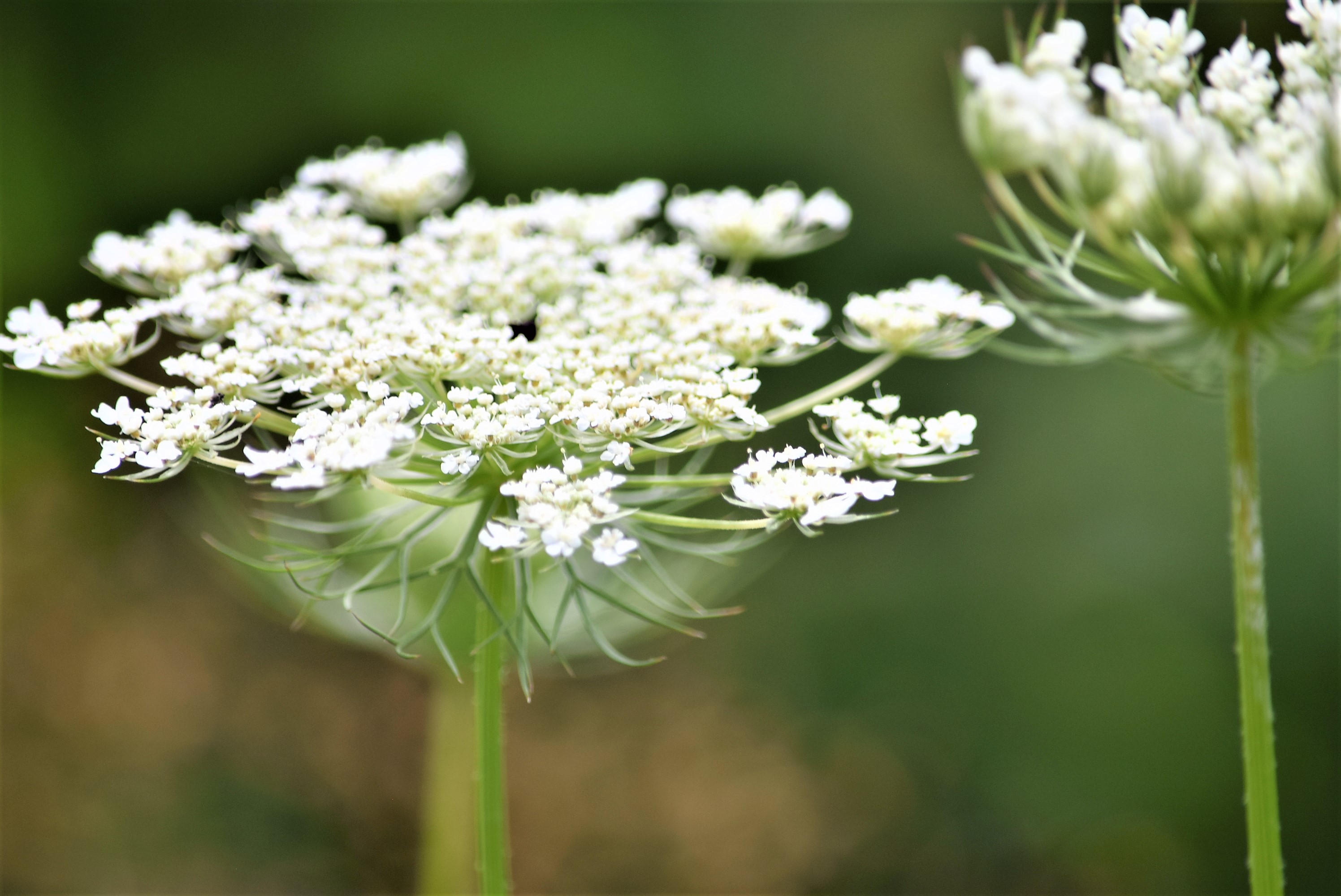
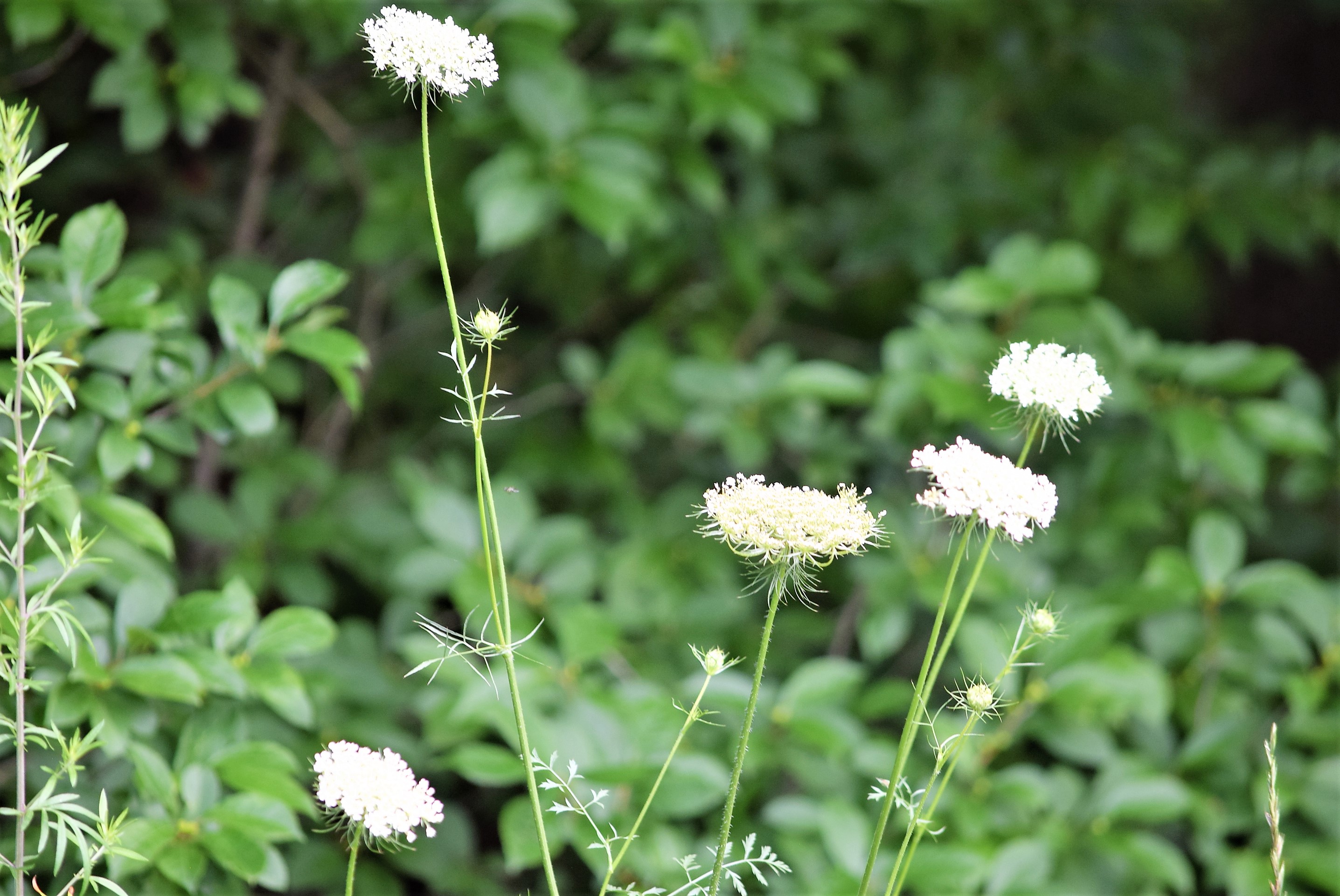
And one thing I’ve learned just lately is the difference between Queen Anne’s lace (Daucus carota,)

Queen Anne’s Lace

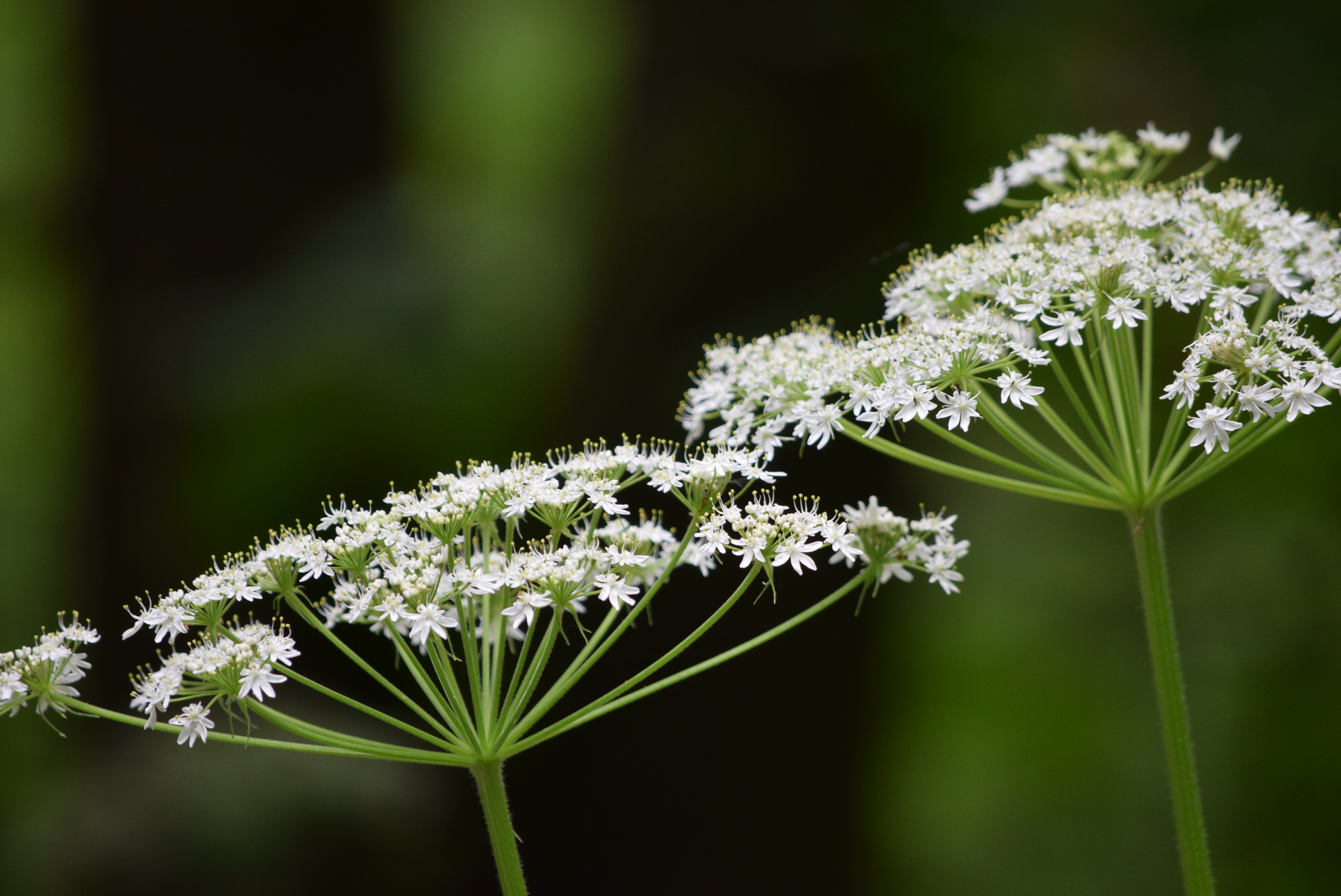
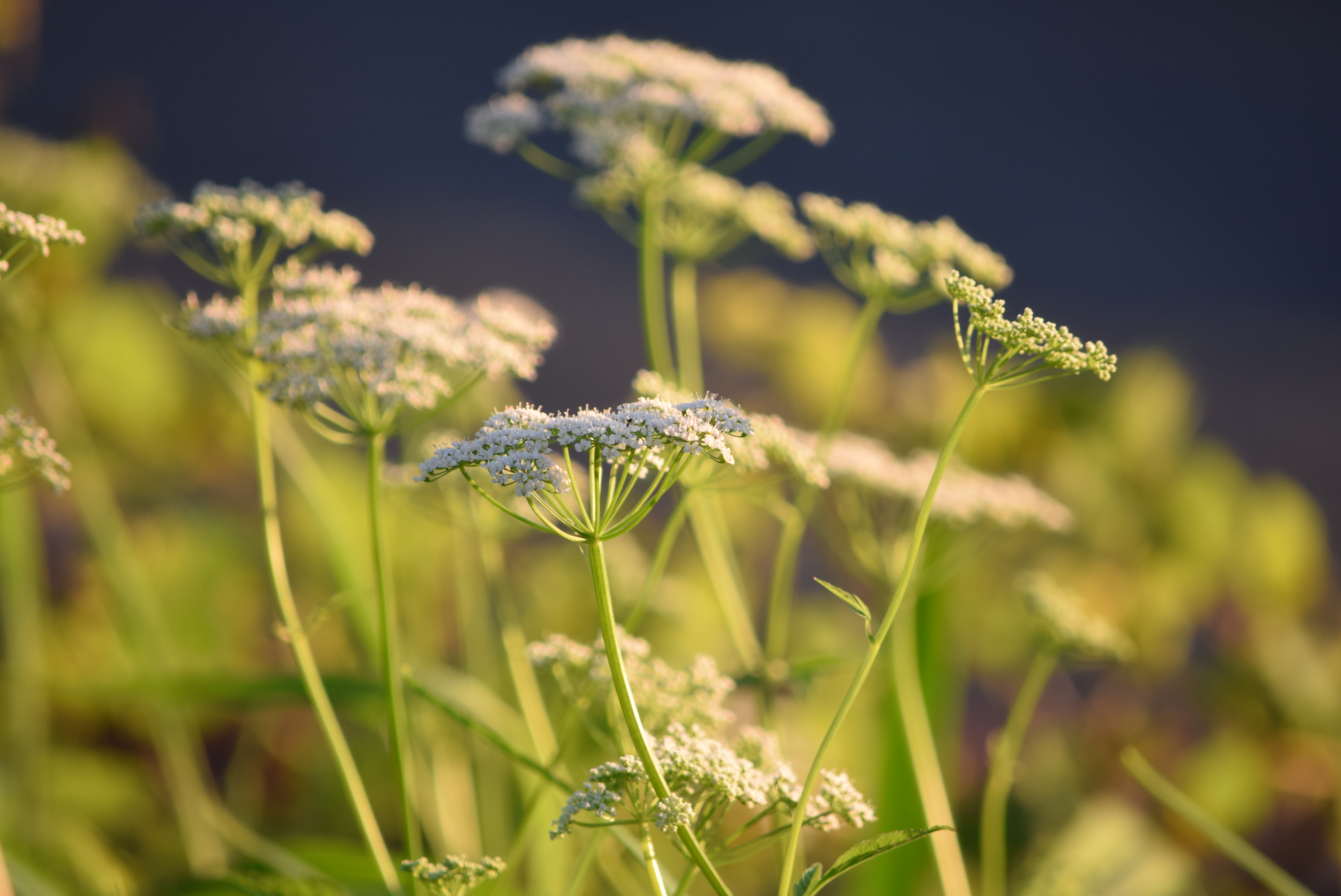
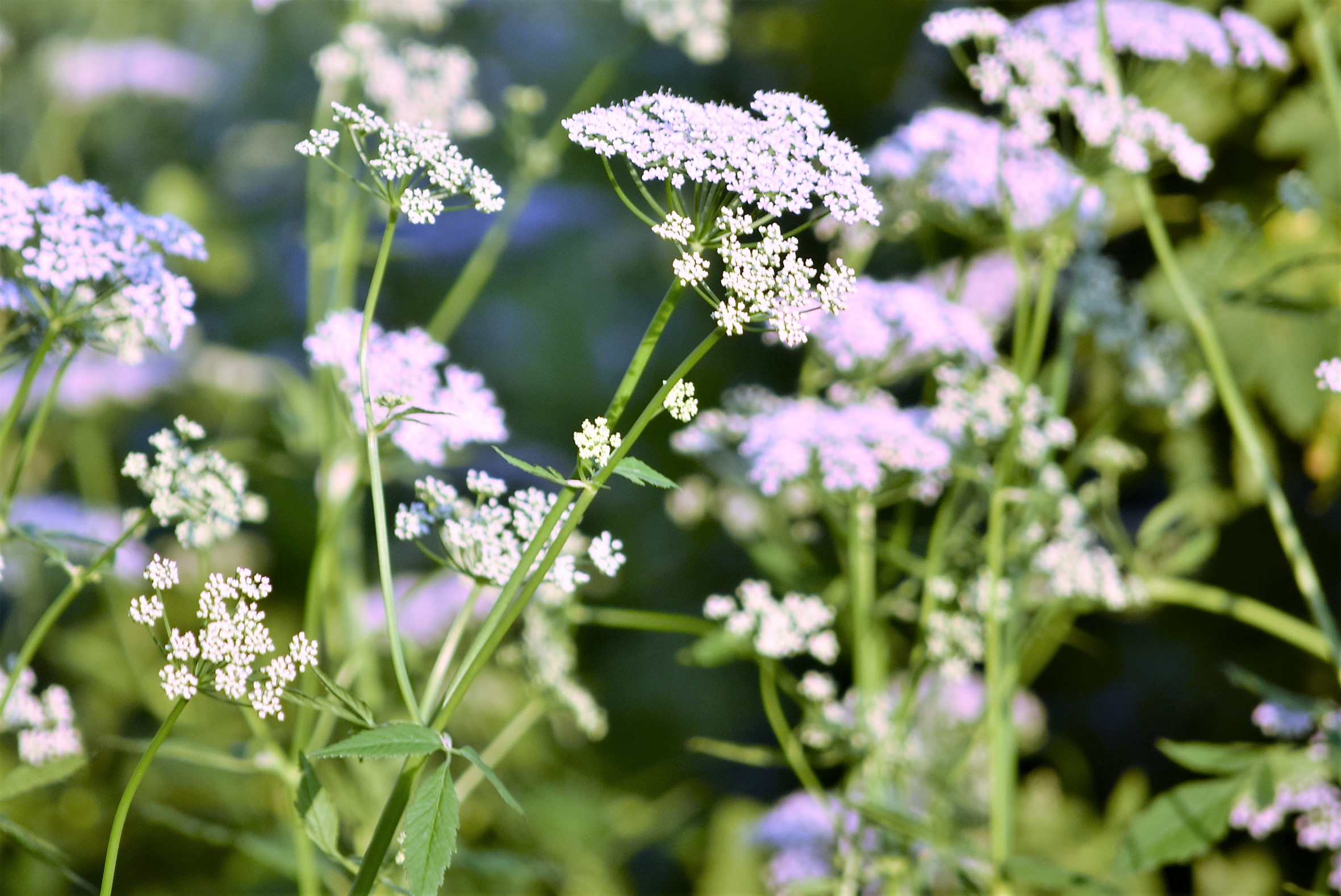
and poison hemlock (Conium maculatum).

Poison Hemlock

Quite literally, it’s the difference between life and death.

Unlike Queen Anne’s lace, parts of which are edible, poison hemlock is as its name indicates – a deadly plant and definitely NOT for eating.

But easily confused, apparently, by me.

All this time, I thought I was taking photographs of a prolific and well-loved wildflower – or invasive weed – depending on your point of view. When in reality, I was also sometimes photographing a poisonous imposter.

Poison Hemlock

I even enlarged and framed one of my photographs for our guest room, believing all the while it was lovely Queen Anne’s lace which so nicely complimented the old quilt on the iron bed.

Turns out … I was dead wrong.

Isn’t learning fun?

Queen Anne’s Lace

Named for Queen Anne of England (1665-1714) this lacey flower is frequently found roadside around my New England home. It’s a summer meadow filler too, dainty-looking, but a bit tough to pick.  The flower begins and ends its life pulled in tight on itself in a delicate, little ball – blooming wide open only in the hope of pollination.

Legend has it Queen Anne was quite a lace maker. Once upon a time, she pricked her finger and a single, tiny droplet of royal blood fell upon her lace work – just like the tiny, purple spot found within the central area of her namesake flower.

I just love a story where someone else’s past shows up in my present.

Queen Anne’s Lace

A biennial, Queen Anne’s lace is also known as wild carrot. It’s high in sugar and since Europeans cultivated it, American colonists came to use it as well, boiling the taproot – sometimes in wine.  First year plants are best. Roots work well in soups, stews, and tea. Leaves work well in salad, as do the flowers.

However.

I, for one, plan to continue enjoying both of these flowers, which tend to like the same kinds of space, from behind my camera.

Poison Hemlock

It’s safer there, it doesn’t much matter which elegant flower is which, and my life doesn’t depend on telling them apart.

postcard: mrs. lincoln’s garden

DSC_0356 (5)Jessie Lincoln Beckwith Johnson Randolph loved her mother.

It must be so.

It must be true.

In my imagination, Jessie was a daughter who loved her mother so much … she created a garden just for her. And not just any garden. A garden with thousands of blooms. A garden with borders and pathways. A garden planned and planted by color and symmetry.DSC_0353 (7)Maybe Jessie wanted her mother to have a garden as majestic as her new home.  Maybe she wanted to remind her mother of the years she lived in Europe. Maybe Mary Harlan Lincoln, daughter-in-law of Abraham, was a woman who had everything … except for a formal, parterre garden.DSC_0343 (10)Or maybe, just maybe, Jessie wanted to gift a garden that would bloom and bloom her love forever and ever.
And so far it has.DSC_0350 (8)A garden like this one doesn’t happen by accident and deserves an inspirational setting in which to take root.  This mother-daughter garden grows at Hildene, ancestral home of Abraham Lincoln’s son, Robert Todd Lincoln, in Manchester, VT.DSC_0334 (6)It’s said Mary Harlan Lincoln could see the whole expanse of her garden blooming before her as she stood at her second floor, center bedroom window.  Now known as the Hoyt formal garden, I prefer to think of it as Mrs. Lincoln’s garden.  Stunning from any view, the garden is most beautiful, perhaps, from that second floor – planned as it was to resemble a cathedral stained glass window. DSC_0348 (9)Hildene, a beautiful 24 -room Georgian Revival style manion, is but one generation away from the single-room log cabin Abraham Lincoln was born in.  Tucked into the beautiful Vermont green mountains, visitors can walk, self-guided, through most of the home with many of its original furnishings and features, including family artifacts and a historical timeline perspective of President Lincoln’s life and death.

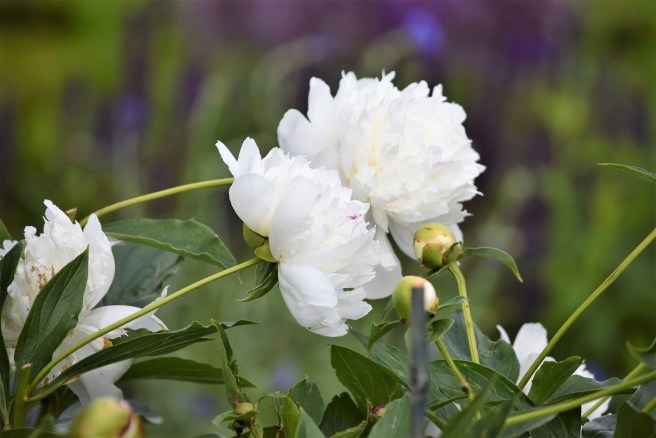
You can read about Hildene’s history  here.DSC_0354 (7)It’s the garden, though, which captured my heart.  I’d love to take tea with Mrs. Lincoln out on the porchswing in the early warmth of mid-June. We’d swing, and sip, and marvel at mountains and the never-ending beauty of Vermont.DSC_0344 (6)And the sweet scent of a thousand peony blossoms would remind us both of the ever-blooming love between a mother and her child.


feelin’ the blues

DSC_0328 (4)

It’s nigh on blueberry season.

Smile.

There’s bushels of nutrition benefits in this bluesy fruit,  and these summer superstars are so versatile in all sorts of recipes from summer salads to muffins, crisps, pies and buckles. They’re a colorful staple in fruit salads and smoothies, and just plain pop in your mouth good – right after a good rinse.

I’m the first to admit, I find the work of picking a tad tedious, and you’re more likely to find me wandering among the bushes with my camera than my bucket. Still, I love these friendly, little berries and try to make the most of their time in season.

Since one of my summer goals is to eat more fruits and veggies, I’m thinking more about eating this year’s blueberries raw,  tart, and fresh and less about just-baked and juicy.

So what about these salad combinations?

Use blueberries and either baby spinach or spring mix as your base and mix in:

  • mandarin oranges, feta cheese, and slivered almonds
  • raw chunks of summer squash and zuchinni, red onion, turkey, and cheddar cubes
  • shelled peas, cherry tomato halves, carrot sticks, and freshly-shredded parmesan cheese
  • pick just about any other fruit to sidekick with your blues in a salad: strawberries, honeydew melon balls, watermelon, grapes, pineapple, or dried cranberries
  • other healthy toppings: walnuts, pine nuts, flax seed, sunflower seeds or a sprinkle or two of shaved coconut

This blueberry vinaigrette recipie looks luscious

You can also visit the U.S. Highbush Blueberry Council for creative recipes as well as freezing, jamming, and canning tips.

Really. They’re a rough and tumble bunch of berries and ready for just about anything.

Go blue!