I’ve been doing a little digging.
(for a book)
And one thing I’ve learned just lately is the difference between Queen Anne’s lace (Daucus carota,)
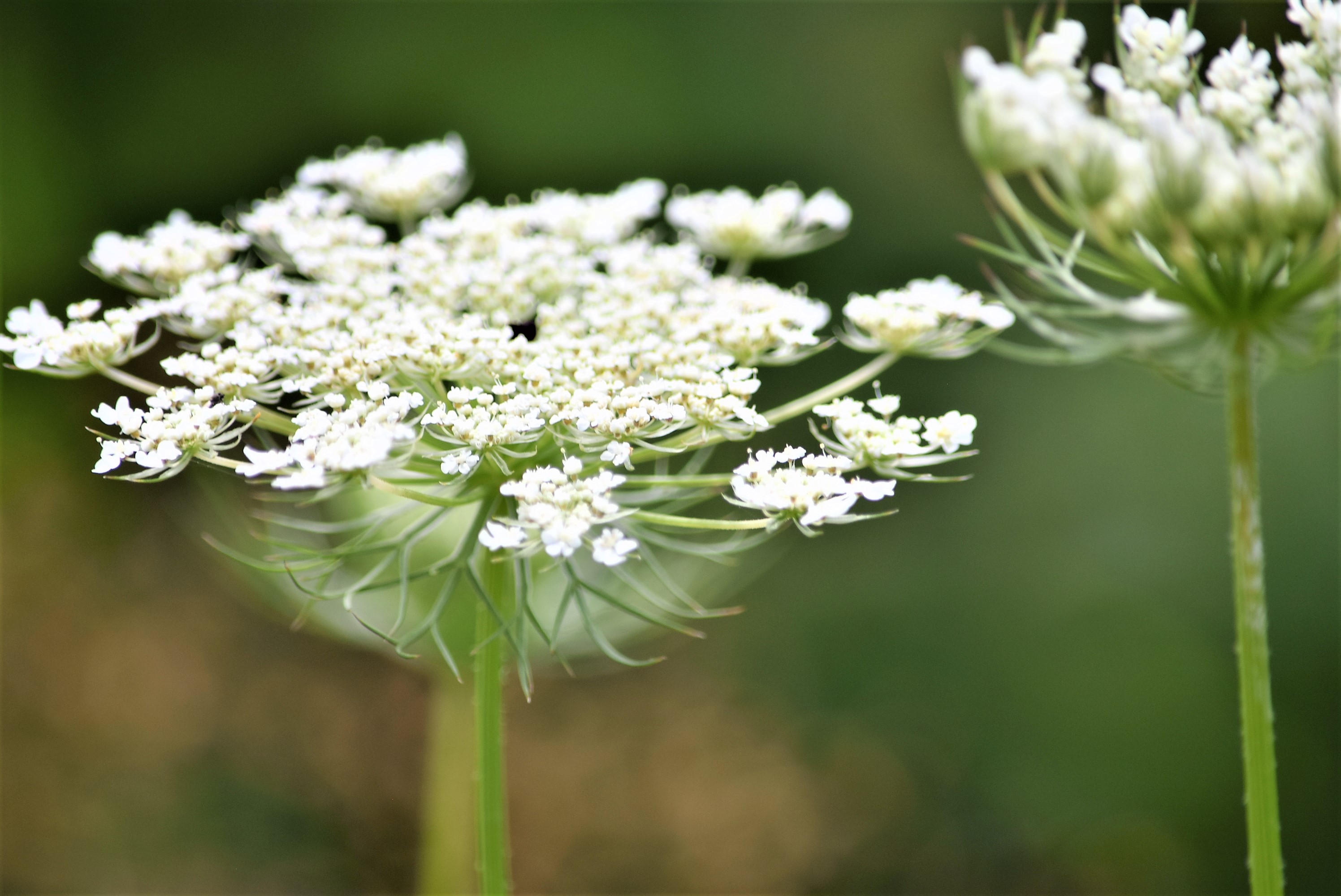
and poison hemlock (Conium maculatum).
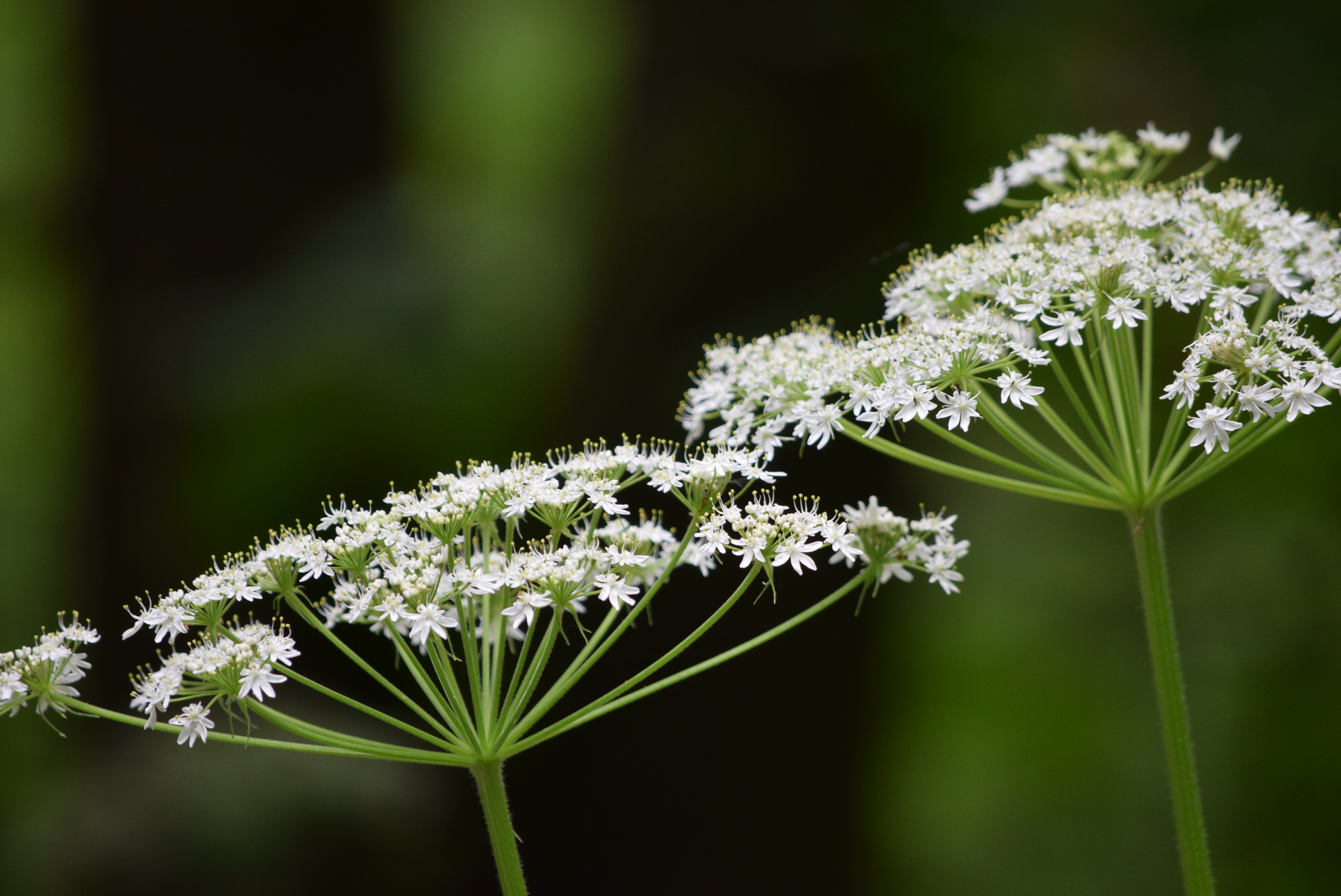
Quite literally, it’s the difference between life and death.
Unlike Queen Anne’s lace, parts of which are edible, poison hemlock is as its name indicates – a deadly plant and definitely NOT for eating.
But easily confused, apparently, by me.
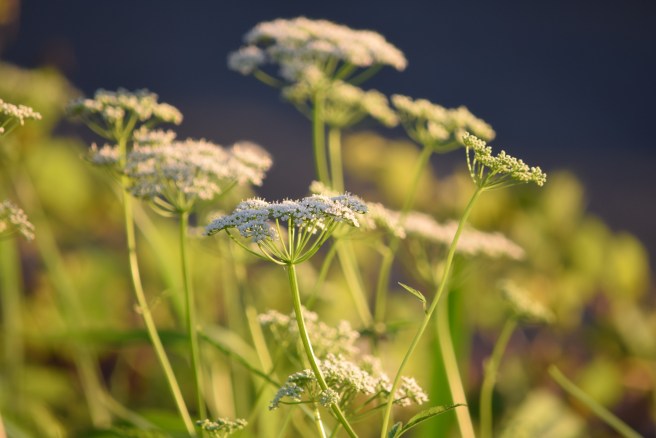
All this time, I thought I was taking photographs of a prolific and well-loved wildflower – or invasive weed – depending on your point of view. When in reality, I was also sometimes photographing a poisonous imposter.
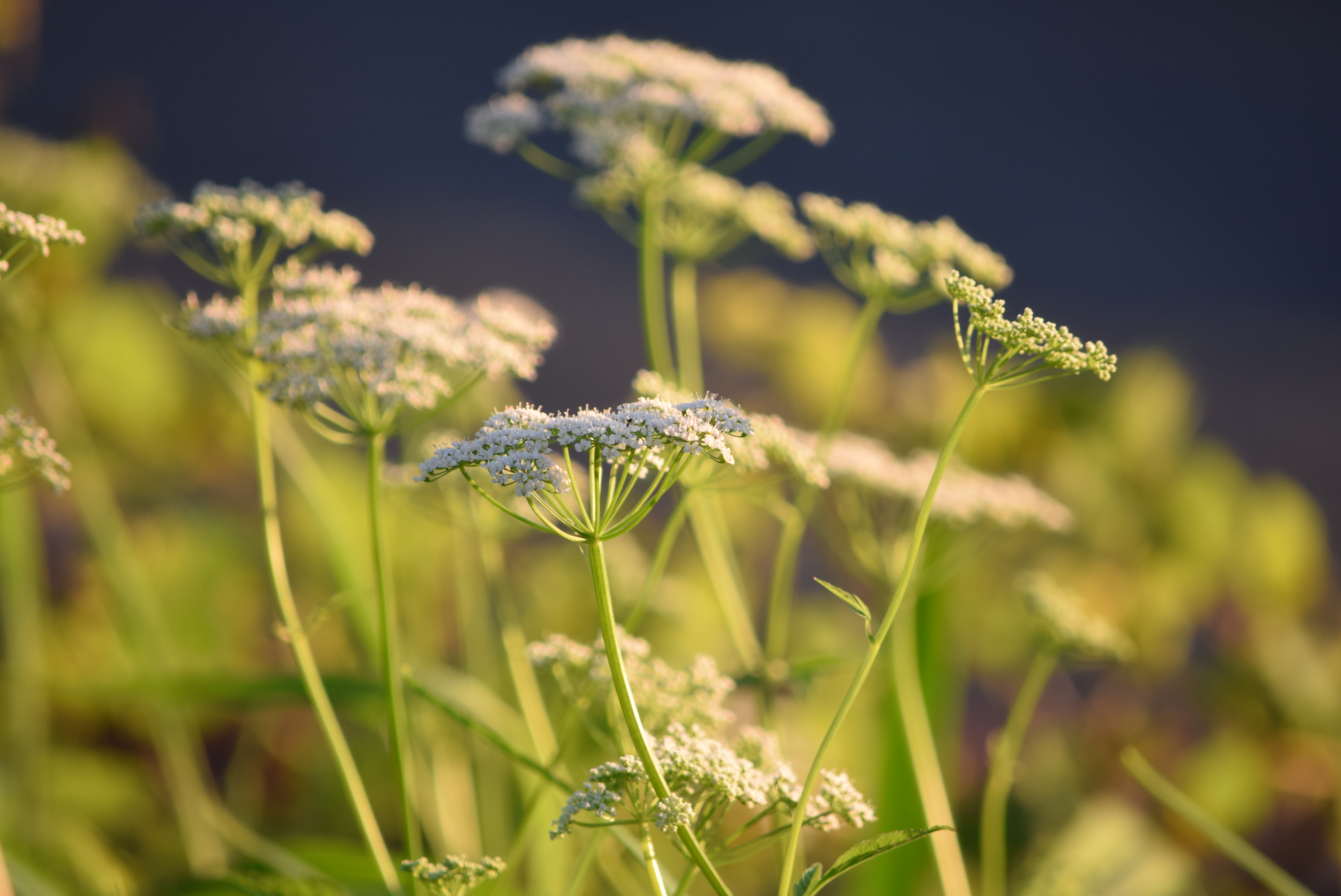
I even enlarged and framed one of my photographs for our guest room, believing all the while it was lovely Queen Anne’s lace which so nicely complimented the old quilt on the iron bed.
Turns out … I was dead wrong.
Isn’t learning fun?

Named for Queen Anne of England (1665-1714) this lacey flower is frequently found roadside around my New England home. It’s a summer meadow filler too, dainty-looking, but a bit tough to pick. The flower begins and ends its life pulled in tight on itself in a delicate, little ball – blooming wide open only in the hope of pollination.
Legend has it Queen Anne was quite a lace maker. Once upon a time, she pricked her finger and a single, tiny droplet of royal blood fell upon her lace work – just like the tiny, purple spot found within the central area of her namesake flower.
I just love a story where someone else’s past shows up in my present.
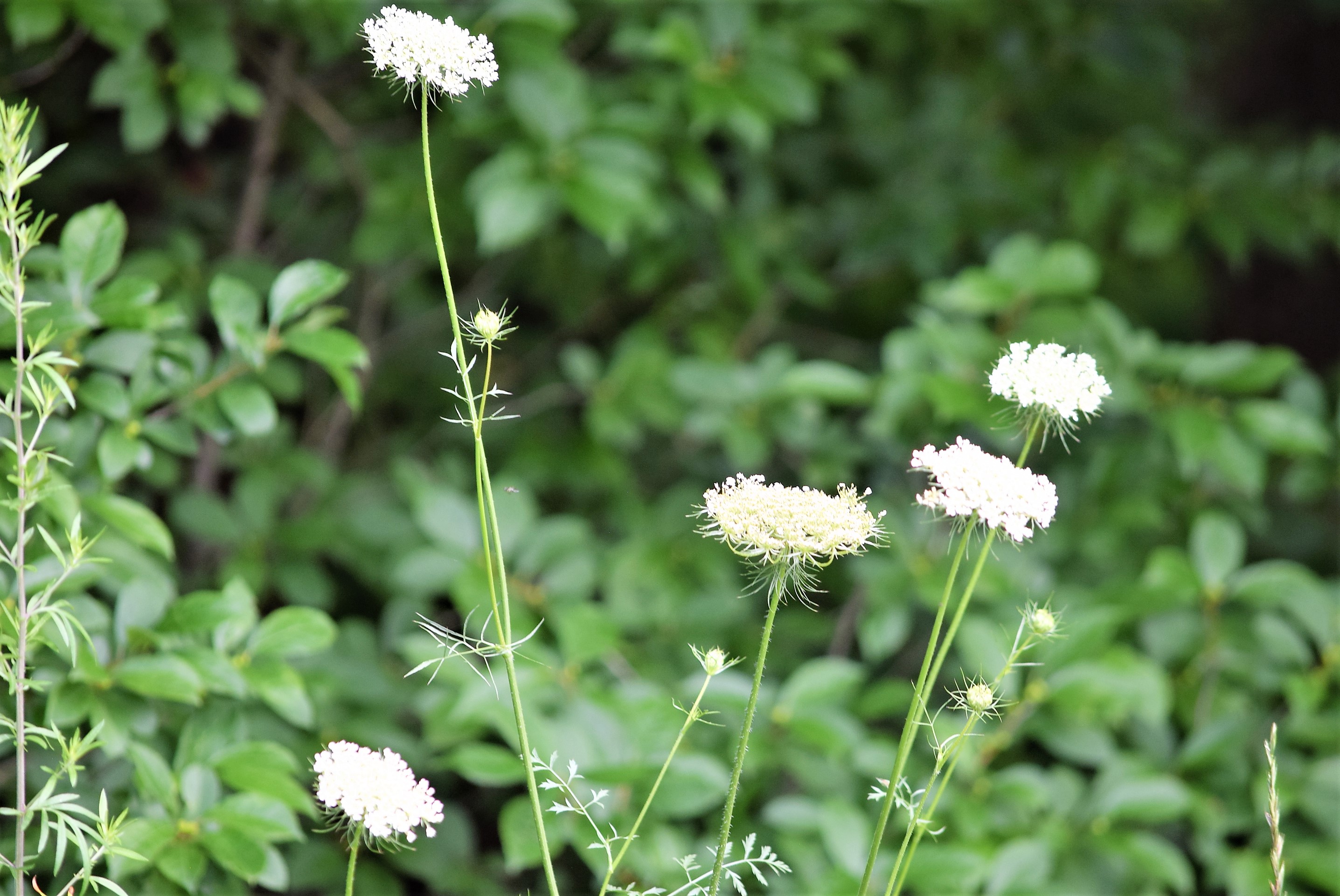
A biennial, Queen Anne’s lace is also known as wild carrot. It’s high in sugar and since Europeans cultivated it, American colonists came to use it as well, boiling the taproot – sometimes in wine. First year plants are best. Roots work well in soups, stews, and tea. Leaves work well in salad, as do the flowers.
However.
I, for one, plan to continue enjoying both of these flowers, which tend to like the same kinds of space, from behind my camera.
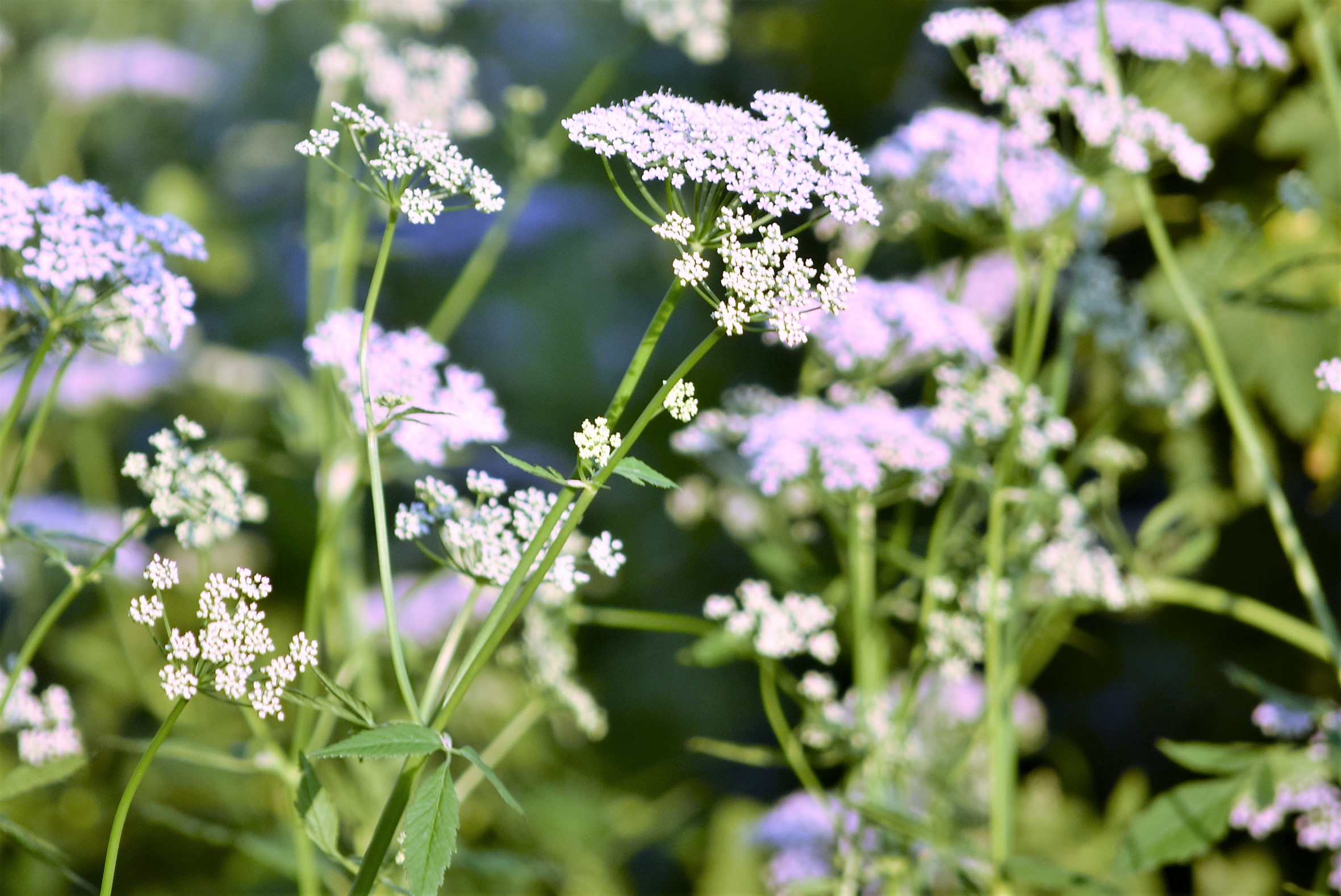
It’s safer there, it doesn’t much matter which elegant flower is which, and my life doesn’t depend on telling them apart.

 Jessie Lincoln Beckwith Johnson Randolph loved her mother.
 Maybe Jessie wanted her mother to have a garden as majestic as her new home. Maybe she wanted to remind her mother of the years she lived in Europe. Maybe Mary Harlan Lincoln, daughter-in-law of Abraham, was a woman who had everything … except for a formal, parterre garden.
 Or maybe, just maybe, Jessie wanted to gift a garden that would bloom and bloom her love forever and ever.
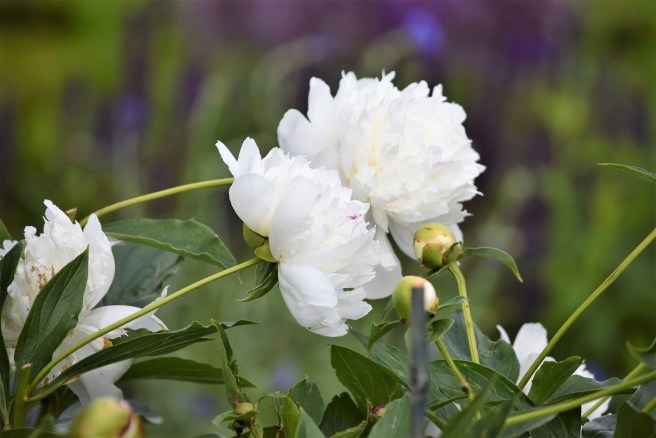 A garden like this one doesn’t happen by accident and deserves an inspirational setting in which to take root. This mother-daughter garden grows at Hildene, ancestral home of Abraham Lincoln’s son, Robert Todd Lincoln, in Manchester, VT.
 It’s said Mary Harlan Lincoln could see the whole expanse of her garden blooming before her as she stood at her second floor, center bedroom window. Now known as the Hoyt formal garden, I prefer to think of it as Mrs. Lincoln’s garden. Stunning from any view, the garden is most beautiful, perhaps, from that second floor – planned as it was to resemble a cathedral stained glass window.
  Hildene, a beautiful 24 -room Georgian Revival style manion, is but one generation away from the single-room log cabin Abraham Lincoln was born in. Tucked into the beautiful Vermont green mountains, visitors can walk, self-guided, through most of the home with many of its original furnishings and features, including family artifacts and a historical timeline perspective of President Lincoln’s life and death.
 It’s the garden, though, which captured my heart. I’d love to take tea with Mrs. Lincoln out on the porchswing in the early warmth of mid-June. We’d swing, and sip, and marvel at mountains and the never-ending beauty of Vermont.
 And the sweet scent of a thousand peony blossoms would remind us both of the ever-blooming love between a mother and her child.



 one hopeful year